
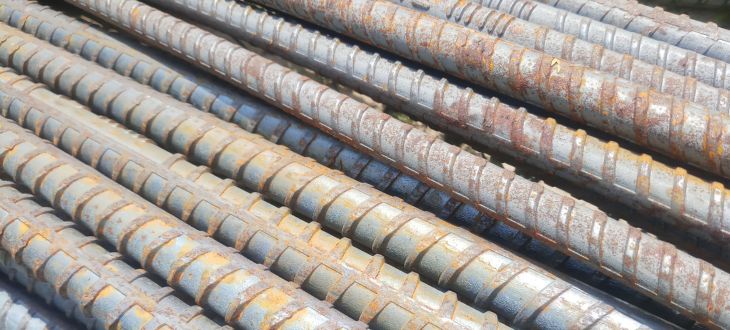
Reinforcing materials are the backbone of durable, long-lasting structures — and the industry is evolving. Fiber-reinforced polymer (FRP) rebar is one of the most significant innovations in construction materials in recent decades, offering a compelling alternative to traditional steel in a growing number of applications. So, what is FRP rebar, exactly, and why are engineers and contractors paying attention? Here’s everything you need to know.
What is FRP Rebar?
FRP rebar is a reinforcing bar made from Fiber Reinforced Polymer — a composite material consisting of a polymer matrix reinforced with high-strength fibers. The fibers are typically made from glass (GFRP), carbon (CFRP), aramid, or basalt, while the polymer matrix is usually epoxy, vinyl ester, or polyester thermosetting plastic.
The result is a reinforcing bar that is lightweight, non-corrosive, and capable of high tensile strength — properties that make it attractive for projects where traditional steel falls short. Tampa Steel & Supply carries FRP rebar for a range of project specifications.
How Is FRP Rebar Made?
FRP rebar is manufactured through a process called pultrusion. Fibers are pulled through a resin mixture, thoroughly coated, and then passed through a heated die to form the bar’s shape. This process aligns the fibers longitudinally, maximizing tensile strength along the length of the bar. The result is a highly consistent, uniform product with predictable performance characteristics.
How Does FRP Rebar Differ from Steel Rebar?
Understanding what FRP rebar is requires understanding what makes it different from the conventional option. The distinctions go beyond materials — they affect handling, installation, long-term performance, and total project cost.
Weight: FRP rebar weighs roughly one-quarter of what steel rebar does. That difference translates directly to lower shipping costs, easier on-site handling, and reduced labor demands during installation.
Tensile Strength: FRP rebar generally has a higher tensile strength than steel rebar, but it is more brittle. Unlike steel, which bends and deforms gradually under excessive stress, FRP rebar will crack without significant warning. This makes proper structural design especially important when specifying FRP.
Corrosion Resistance: This is where FRP rebar’s most significant advantage lies. Steel rebar corrodes when exposed to moisture, chlorides, and de-icing salts — a leading cause of structural deterioration in bridges, parking structures, and coastal buildings. FRP rebar does not rust or corrode, period. For a deeper look at why this matters structurally, see our post on the benefits of FRP rebar.
Electromagnetic Neutrality: FRP rebar is non-magnetic and does not conduct electricity, making it the preferred choice in environments sensitive to electromagnetic interference — such as hospitals, MRI facilities, and research labs.
Common Applications for FRP Rebar
FRP rebar isn’t a universal replacement for steel, but it excels in specific environments. Common uses of FRP rebar include:
- Bridges and marine structures where moisture and salt exposure is constant
- Parking garages prone to chloride intrusion from de-icing chemicals
- Water treatment plants where chemical exposure degrades steel over time
- Medical facilities requiring non-magnetic reinforcement
- Coastal and seawall construction with high long-term corrosion risk
The Pros and Cons of FRP Rebar
Every material has trade-offs. For a full breakdown, visit our dedicated post on the pros and cons of FRP rebar — but here’s a summary:
Pros
- Corrosion resistance — Extends structure lifespan significantly, especially in marine and chemical environments
- Lightweight — Reduces transportation costs and labor demands on the job site
- Non-magnetic and non-conductive — Ideal for sensitive infrastructure applications
- Low long-term maintenance costs — Structures reinforced with FRP require fewer repairs over their lifespan
- High tensile strength — Outperforms steel rebar in pure tensile load capacity
- Chemical resistance — Holds up well in environments exposed to acids, alkalis, and chlorides
Cons
- Higher upfront cost — FRP rebar costs more per unit than traditional steel rebar, though lifecycle savings often offset this
- Brittleness — Lack of ductility means failure can occur suddenly without the warning signs steel provides
- Thermal sensitivity — The polymer matrix can degrade at high temperatures, limiting use in certain applications
- Specialized design requirements — Engineers must account for FRP’s unique mechanical properties; standard steel rebar specifications don’t directly apply
- Limited bendability — Unlike steel, FRP rebar cannot be bent on-site; custom shapes must be specified in advance
Frequently Asked Questions About FRP Rebar
Is FRP rebar as strong as steel rebar?
In terms of tensile strength, yes — FRP rebar typically exceeds steel. However, it lacks steel’s ductility, meaning it won’t deform before breaking. Structural design must account for this difference. For more detail, see our FRP rebar FAQs.
Can FRP rebar be used in all the same applications as steel?
Not in every case. High-temperature environments and applications requiring ductile failure behavior are generally not suitable for FRP. However, for corrosion-prone or electromagnetically sensitive projects, it’s often the better choice.
How does the cost compare?
The initial cost of FRP rebar is higher than steel, but reduced maintenance, longer lifespan, and fewer repairs typically make it more cost-effective over the life of a structure.
Is it difficult to install?
FRP rebar requires different handling techniques than steel, primarily because it cannot be field-bent. However, the reduced weight makes it easier to move and position, and most crews adapt quickly.
Is FRP Rebar Right for Your Project?
FRP rebar represents a genuine advancement in construction materials — not a replacement for steel in every scenario, but a superior solution in the right conditions. If your project involves exposure to moisture, salt, chemicals, or electromagnetic sensitivity, FRP rebar deserves serious consideration. Browse Tampa Steel & Supply’s FRP rebar products to find the right specifications for your next job.
Visit Tampa Steel & Supply for Metal and Metal Processing Services
Have questions about FRP rebar or other reinforcing materials? The experienced team at Tampa Steel & Supply is ready to help. We provide the highest quality materials and services to customers across the industry — contact us today to learn more.
Request a custom quote online or Call Tampa Steel & Supply at (813) 241-2801.