
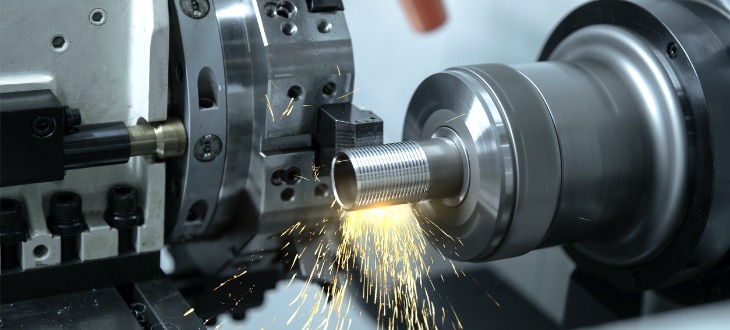
Manufacturing technology is evolving fast, but Computer Numerical Control (CNC) machining remains its most transformative shift. By automating production, CNC machines deliver unmatched precision and speed, making it possible to create complex parts that manual methods simply can’t handle.
So, what is a CNC machine used for? Its applications span almost every sector, including:
- Aerospace & Automotive: High-tolerance engine and structural parts.
- Healthcare & Medicine: Precise surgical instruments and implants.
- Electronics: Intricate circuit boards and housings.
- Defense & DIY: From heavy-duty hardware to custom metal art.
This guide explores the most common applications to show you exactly how this technology powers the modern world.
What Is CNC Machining?
Before diving into specific uses, it helps to understand the fundamentals. CNC machining is a manufacturing process in which pre-programmed computer software controls the movement of machinery, tools, and equipment. The technology governs a wide array of machines—including drills, lathes, mills, and routers—translating digital designs into precise physical actions.
Unlike traditional manual machines that require direct human operation, CNC machines run autonomously based on coded instructions loaded into the system. This allows them to produce extremely precise, repeatable parts with minimal human supervision. If you’d like a deeper look at the mechanics behind the process, check out our guide on how a CNC machine works.
12 Common Uses and Applications of CNC Machines
CNC machines are incredibly versatile tools used across industries to produce high-precision components. Here is a look at the most impactful real-world applications—and why CNC technology has become essential in each one.
1. Aerospace Manufacturing
Aerospace is one of the most demanding environments for precision manufacturing. CNC machines produce intricate components for aircraft, satellites, and rockets—from engine parts and turbine blades to structural brackets and landing gear. These machines handle advanced materials like titanium and high-strength aluminum alloys, ensuring every part meets the strict tolerances and safety requirements the industry demands.
2. Automotive Production
In the automotive sector, CNC machines are essential for producing the components that keep vehicles safe. Engine blocks, transmission housings, brake rotors, and suspension components are all commonly manufactured using CNC machining. Because automotive production requires high-volume output with exact replication, CNC technology delivers the speed and consistency needed for mass production without sacrificing quality.
3. Medical Device Manufacturing
The medical field requires components that are both exceptionally precise and made from biocompatible materials. CNC machines are critical to the production of prosthetics, surgical instruments, orthopedic implants, and dental devices. They work with specialized materials such as medical-grade stainless steel and biocompatible plastics to meet rigorous regulatory standards.
4. Electronics and Circuit Board Production
CNC machines play a key role in the electronics industry, where accuracy at small scales is critical. They are used to manufacture circuit boards, enclosures, and precision housings. The ability to perform extremely fine cuts and drilling makes CNC machining ideal for the intricate details that modern electronics require.
5. Tool and Die Making
Tool and die makers rely on CNC machines to produce the molds, dies, and fixtures that enable mass production across virtually every sector. CNC precision ensures these tools fit together perfectly, which directly improves the accuracy of downstream production. Without CNC-manufactured tooling, the consistency required for high-volume production would be nearly impossible to achieve.
6. Woodworking and Furniture Production
CNC machines enable manufacturers to cut and engrave wood with a level of detail manual methods can’t match. Furniture makers and cabinet shops use CNC technology to produce complex designs and precise joinery at scale. The result is a dramatic reduction in human error and faster production timelines.
7. Jewelry Making
The jewelry industry has embraced CNC machining for its ability to carve and shape precious metals—gold, silver, and platinum—with remarkable detail. CNC technology allows jewelers to automate the production of intricate pieces, ensuring even the most delicate designs are reproduced accurately.
8. Rapid Prototyping
CNC machines dramatically accelerate the product development cycle. Engineers and designers use them to produce functional prototypes quickly, test designs, and make adjustments before committing to full production. This ability to iterate rapidly saves significant time and money.
9. Signage and Custom Engraving
From metal business signs to personalized awards, CNC machines provide the level of precision required for professional results. CNC engraving and cutting services are widely used by businesses that need custom signage produced consistently. CNC plasma cutting is a particularly powerful method for cutting intricate metal designs with speed.
10. Architectural Design and Scale Modeling
Architects use CNC machines to produce precise scale models of buildings and infrastructure projects. These models help visualize the final design before ground is broken. CNC machining can precisely shape materials like foam, wood, and plastic into the detailed forms required for high-quality presentations.
11. Food Processing Equipment
CNC machining is used to manufacture cutting tools, shaping dies, and components for food packaging equipment. Consistency and hygiene are paramount, and CNC-machined parts help ensure that processing equipment meets food-safety standards and maintains the uniformity required in high-speed food processing.
12. Defense and Military Manufacturing
The defense sector is a demanding end-user of CNC machining. Military equipment—including vehicles, firearms, and guidance systems—must be manufactured to exacting tolerances where failure is not an option. CNC machines ensure that every part meets strict specifications for performance and safety.
CNC Machining and Metal Cutting: A Natural Pairing
CNC machining pairs naturally with advanced metal cutting technologies like CNC plasma cutting — which uses a high-velocity jet of ionized gas to slice through conductive metals like steel, aluminum, and brass with speed and accuracy. For those weighing their options, our guide on the differences between plasma cutting and laser cutting is a helpful starting point.
The Versatility of CNC Machines
CNC machines are indispensable because they offer unmatched precision, complexity, and repeatability across nearly any material. From aerospace-grade titanium to rapid prototypes and custom art, they are the primary engine for modern production.
As software and hardware evolve, CNC capabilities continue to expand. Whether used for one-off prototypes or high-volume manufacturing, this technology remains the global standard for innovation and precision.
Visit Tampa Steel & Supply for CNC Plasma Cutting and High-Quality Metal
Ready to put CNC machining to work for your next project? The skilled professionals at Tampa Steel & Supply specialize in CNC plasma cutting and offer an extensive selection of premium steel and metal products. Whether you need custom-cut components, metal art, signage, or fabrication materials, our team has the expertise and equipment to bring your vision to life.
We also offer helpful resources on topics like CNC plasma cutting mistakes to avoid, plasma cutting safety, and CNC plasma table design — so you can approach every project with confidence.
Stop by our warehouse, request a quote online, or call Tampa Steel & Supply a (813) 241-2801 to get started today.