
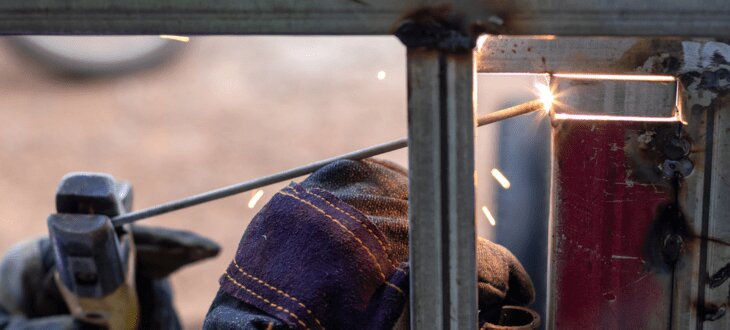
Mild steel is one of the most forgiving and widely welded materials in fabrication, construction, and repair work. But choosing the right welding process — MIG, TIG, or Stick — makes a big difference in weld quality, productivity, and overall project cost.
Each welding method has strengths and weaknesses depending on material thickness, working conditions, and the finish you need. This guide explains how MIG, TIG, and Stick welding compare when working with mild steel, so you can choose the best process for your job.
Why Mild Steel Is So Weldable
Mild steel contains a low percentage of carbon, which makes it:
- Easy to melt and fuse
- Less prone to cracking
- Compatible with most filler metals
- Ideal for structural, fabrication, and repair work
Because of this, mild steel works well with all three major welding processes — MIG, TIG, and Stick.
Understanding the Three Welding Processes
MIG Welding (Gas Metal Arc Welding)
MIG welding uses a continuously fed wire electrode and shielding gas to create the weld. It is the most commonly used welding process for mild steel in fabrication shops.
MIG welding is best suited for:
- Thin to medium thickness steel
- Production work
- Shop environments
- Beginners and high-productivity jobs
MIG produces clean, strong welds with minimal slag and allows fast travel speeds.
TIG Welding (Gas Tungsten Arc Welding)
TIG welding uses a non-consumable tungsten electrode and a separate filler rod. It gives the welder full control over the weld puddle, producing the cleanest, most precise welds possible.
TIG welding is best suited for:
- Thin material
- Visible or decorative welds
- Precision fabrication
- Automotive, aerospace, and custom metalwork
TIG welding is slower but offers unmatched control and appearance.
Stick Welding (Shielded Metal Arc Welding)
Stick welding uses a flux-coated rod that creates its own shielding gas when burned. It is extremely rugged and works well in outdoor and field conditions.
Stick welding is best suited for:
- Thick steel
- Structural welding
- Outdoor jobs
- Dirty or rusty material
- Construction and repair work
Stick welding produces slag that must be chipped away, but offers deep penetration and durability.
Choosing the Best Method by Steel Thickness
Thickness is a primary factor in selecting your welding process:
| Steel Thickness | Recommended Process | Why? |
|---|---|---|
| Thin (Under 1/8″) | TIG or MIG | Precise heat control prevents burn-through. |
| Medium (1/8″ to 1/4″) | MIG | Fast, easy, and provides good penetration. |
| Thick (Over 1/4″) | Stick or High-Power MIG | Required for deep penetration on heavy sections. |
Choosing Based on Work Environment
In a fabrication shop with clean steel and shielding gas available, MIG is usually the most efficient option. For precision work or visible welds, TIG is ideal. However, for outdoor jobs, windy conditions, or dirty material, Stick welding is the most reliable because it does not rely on external gas.
Weld Appearance vs. Productivity
- MIG: Offers a balance of speed and quality, making it ideal for most production work.
- TIG: Produces the cleanest, smoothest welds but is much slower.
- Stick: Least attractive finish (requires chipping slag) but provides the strongest performance in rough conditions.
Common Welding Pitfalls
To ensure high-quality results, avoid these common mistakes:
- Using too much heat on thin steel, which can cause warping or burn-through.
- Using too little heat on thick steel, resulting in poor penetration.
- Failing to clean mill scale, oil, or rust, which can contaminate the weld.
- Improper wire or rod selection.
- Poor shielding gas coverage, leading to porosity in MIG and TIG welds.
Simple Decision Guide
- Choose MIG if you want speed, clean welds, and high productivity in a shop.
- Choose TIG if you need cosmetic precision or are working with very thin material.
- Choose Stick if you are working outdoors, on thick steel, or in harsh conditions.
Selecting the Right Welding Consumables
The right filler metal ensures strong, crack-resistant welds:
- ER70S-6 wire: For MIG and TIG welding.
- E6011 or E6013 rods: For general stick welding.
- E7018 rods: For structural stick welding.
Get Welding-Ready Steel from Tampa Steel & Supply
The best weld starts with quality material. Clean, consistent steel makes welding easier, stronger, and more predictable. Tampa Steel & Supply stocks a full range of mild steel plate, sheet, tube, pipe, and structural shapes ideal for all welding processes.
Request a Quote Online or Call Tampa Steel & Supply at (813) 241-2801.