
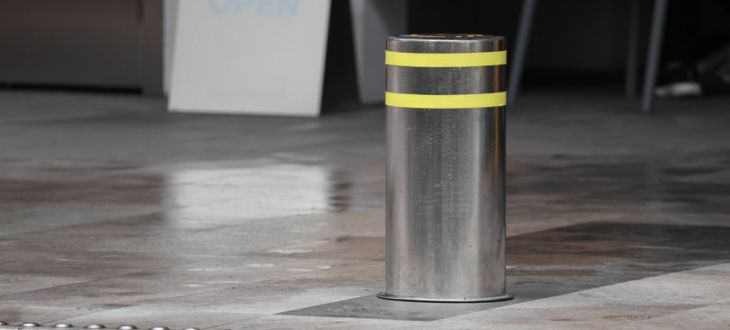
What Are Bollards and Why Do They Matter?
A bollard is a short, sturdy vertical post, typically made from steel, installed in the ground to control or block vehicle traffic. You’ll find them outside gas stations, retail entrances, warehouses, and parking structures. Their job is to protect buildings, equipment, and pedestrians from vehicle impact, absorbing collisions that would otherwise cause serious property damage or injury.
Because bollards are often the first line of defense against vehicle related accidents, their condition matters. A bollard that’s rusted through or structurally weakened doesn’t offer the same protection it did on day one, which makes understanding lifespan an important part of any installation plan.
How Long Do Steel Bollards Last?
Properly installed steel bollards typically last 20 to 30 years, and in some cases even longer with strong protective coatings and regular maintenance. The actual lifespan depends heavily on the quality of the steel, the type of protective finish applied, and how much wear the bollard takes on from weather, moisture, and impacts over time.
Factors That Impact Bollard Lifespan
Material Quality & Structural Ratings
Not all steel is created equal. High-strength, structural-grade steel pipe holds up far better over a 20- to 30-year span than lower-grade material. Schedule 40 and heavy-wall Schedule 80 steel pipe—typically rated ASTM A53 Grade B or ASTM A500—are the industry standards for bollards. They are specifically engineered to handle both heavy structural stress and long-term outdoor exposure.
Protective Coatings & Metal Gauges
A bollard’s finish does much of the heavy lifting when it comes to longevity. Hot-dip galvanized coatings, high-performance powder coating, and heavy-duty, 11-gauge steel sleeves or CNC plasma-cut caps shield the core post from physical damage and corrosion. Without this protective layer, moisture reaches bare metal quickly and weakens the post from the outside in.
Environmental Exposure & Coastal Climate
Where a bollard is installed plays a massive role in how long it lasts. In Hillsborough County, bollards face severe environmental challenges:
- Saltwater Corrosion: Coastal salt air aggressively accelerates rust compared to drier, inland regions.
- Heavy Humidity & Heat: Year-round humidity traps moisture against painted surfaces, searching for tiny cracks to oxidize the steel.
- Coastal Tropical Storms: Heavy rainfall and intense storm surges demand a resilient post and finish that won’t degrade under harsh weather conditions.
Impact History
Every collision—even a minor one—takes a toll over time. Repeated low-speed impacts from vehicle-related accidents, forklifts bumping warehouse equipment, or shopping carts scraping against a post can gradually dent or crack the protective coating. Over time, this cumulative damage shortens a bollard’s effective lifespan, even if no single hit causes catastrophic failure.
Maintenance and Upkeep
Bollards that are cleaned, inspected, and repainted on a regular schedule last significantly longer than those left untouched. Catching surface rust or peeling paint early prevents oxidation from spreading beneath the surface. A simple one-year inspection to check for leaning, base movement, or coating wear goes a long way toward extending a post’s usable life.
Foundation Quality
A bollard is only as stable as what is holding it in the ground. Posts set in properly mixed, adequately cured concrete (allowed to cure for at least seven days for full strength) with the correct embedment depth resist ground movement far better than those installed with shortcuts. A compromised foundation creates a wobbly or leaning post well before the steel itself shows signs of wear.
Signs It May Be Time to Replace
Visible rust that has spread beyond the surface, noticeable leaning or movement at the base, dents or bends from impact, and peeling coatings that expose bare metal are all signs a bollard’s protective function may be compromised. In security applications, any structural damage can also mean the bollard no longer meets its original crash performance rating, which is worth checking if the post has taken a significant hit.
Final Thoughts
With the right steel, a quality coating, and reasonable maintenance, steel bollards are built to protect a property for decades. Environmental conditions and impact history will always play a role, but regular inspection and upkeep go a long way toward getting the most out of your investment. If you’re planning a new bollard installation and want to start with quality steel pipe built for the long haul, Tampa Steel & Supply can help you find the right material for your project.
For a closer look at how steel pipe bollards are constructed and installed, check out our guide on how steel pipe bollards work.
If you’re deciding between fixed, removable, or decorative options for your site, our guide to different types of bollards and their uses can help.