
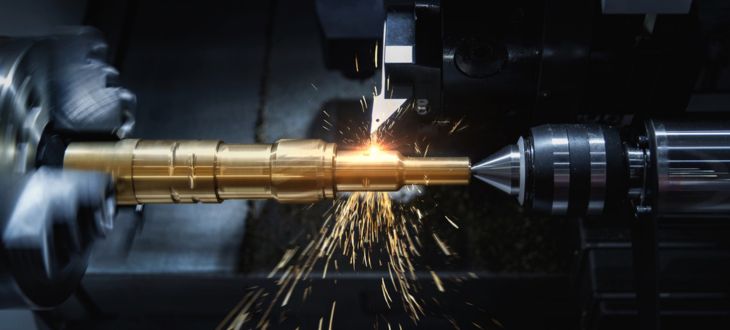
Whether you’re a hobbyist running a desktop CNC router in your garage or a Tampa Bay fabricator programming a full production run, the metal you select has just as much impact on your finished component as the machine itself. Choosing the wrong alloy can lead to excessive tool wear, poor surface finishes, or structural failure under operational loads.
This comprehensive guide covers the fundamentals of CNC machining metals, how the subtractive manufacturing process works, the most common metals used, and how to select the right material for your specific application.
What Is CNC Machining?
CNC (Computer Numerical Control) machining is a subtractive manufacturing process where computer-guided tools cut away material from a solid block or metal blank to craft a finished component. Instead of manually shaping metal, operators program precise G-code instructions that direct machine movements for cutting, drilling, and milling. This automated precision ensures tight tolerances, excellent repeatability, and scalable production for everything from custom prototype brackets to thousands of uniform production parts.
CNC machining has expanded far beyond traditional manufacturing facilities. DIY hobbyists, metal artists, and small custom fabrication shops across Tampa Bay now utilize benchtop and industrial CNC equipment to prototype parts, fabricate custom hardware, and create intricate metal art. Regardless of scale, success depends on one fundamental question: which metal alloy will deliver the required structural integrity and performance once machining is complete?
How CNC Machining Works
The manufacturing workflow begins with a digital 3D model developed in computer-aided design (CAD) software, which is converted into G-code toolpaths via CAM software. Once the metal workpiece is securely clamped and cutting tools are loaded, the CNC machine executes the program step-by-step, removing material along programmed coordinates until reaching exact dimensions. Depending on your equipment, this may involve rotating tools cutting stationary material (milling), a spinning workpiece shaped by a stationary tool (turning), or high-precision thermal processes like CNC plasma or laser cutting.
Common Metals Used in CNC Machining & Their Key Properties
Different metals react uniquely under end mills, lathes, and plasma torches. Below is a breakdown of the most common metals used in CNC machining and their core performance characteristics:
1. Aluminum
Aluminum is one of the most widely used metals in CNC machining due to its lightweight nature, exceptional machinability, and low cutting-force requirements, which minimize tool wear. Popular grades like aluminum 6061 offer an ideal balance of strength, corrosion resistance, and ease of machining, while high-strength aluminum 7075 provides aerospace-grade durability. Standard aluminum sheet sizes typically include 4×8, 4×10, and 5×10 feet, making them versatile for various structural and decorative applications.
2. Carbon Steel
Steel provides superior structural strength and durability, making it essential for load-bearing brackets, heavy equipment components, and high-stress mechanical parts. While steel requires slower cutting speeds and robust tooling compared to aluminum, its mechanical strength is unmatched. Mild steel offers excellent machinability and cost efficiency, while higher-carbon and alloy steels deliver increased hardness at the cost of faster tool wear. Sheet steel thickness is measured in gauges (where lower numbers signify thicker metal), ranging from 14ga and 16ga for enclosures to heavy 11ga and 12ga plates for weight-bearing mounts. Common steel sheet sizes include 4×8, 5×10, and 6×12 feet.
3. Stainless Steel
For applications requiring maximum corrosion resistance, stainless steel is the industry standard. It withstands harsh marine, humid, and chemical environments — a critical factor for outdoor hardware installed around Tampa Bay’s saltwater air. However, stainless steel tends to work-harden quickly during machining, requiring optimized feed rates and cutting speeds to prevent tool degradation. Tampa Steel & Supply stocks an extensive inventory of stainless steel products across multiple grades to meet diverse strength and corrosion-resistance demands.
4. Titanium
Titanium features an extraordinary strength-to-weight ratio combined with high-tier corrosion resistance, making it essential for aerospace components, medical devices, and high-performance engineering. Because titanium has low thermal conductivity, heat generated during cutting stays concentrated at the tool tip rather than dissipating into the workpiece. Machining titanium successfully requires specialized tooling, lower speeds, and high-efficiency coolant systems to control heat build-up.
5. Brass and Copper
As softer, highly conductive non-ferrous metals, brass and copper are favored for electrical components, plumbing fittings, and decorative architectural metalwork. Both materials machine smoothly and produce clean, visually striking surface finishes. While they lack the high mechanical strength of steel or titanium, their superior thermal and electrical conductivity makes them irreplaceable for specialized functional and artistic applications.
How to Choose the Right CNC Machining Metal
Selecting the optimal metal for your CNC project requires evaluating several key operational factors:
- Structural Load & Application: High-stress structural components favor carbon steel or 7075 aluminum, whereas decorative or electrical parts are better suited for brass or copper.
- Environmental Exposure: Outdoor or marine environments in coastal regions like Tampa Bay demand stainless steel or marine-grade aluminum to prevent rust and oxidation.
- Weight Constraints: When minimizing total weight without sacrificing strength is essential, lightweight aluminum or titanium are superior choices over steel.
- Machinability & Budget: Softer metals like aluminum and brass allow faster feed rates and lower tooling wear, driving down overall production costs and turnaround times.
- Surface Finish & Secondary Processing: Consider whether your final part will undergo post-processing treatments like powder coating, anodizing, or polishing to achieve desired weatherproofing and aesthetics.
Visit Tampa Steel & Supply for Metal & CNC Plasma Cutting Services
Need high-quality metal stock or precision processing for your next fabrication project? The experienced professionals at Tampa Steel & Supply provide a full range of prime metal inventory and professional CNC plasma cutting services for custom designs — from base plates and custom brackets to intricate architectural panels cut directly to your specifications.
Inquire for a custom quote online or call Tampa Steel & Supply today at (813) 241-2801 to discuss your material requirements.