
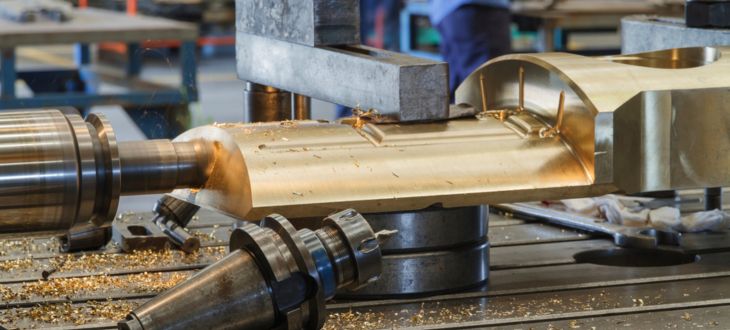
Bronze CNC machining combines the strength of a time-tested alloy with the precision of modern manufacturing. From ancient maritime tools to today’s aerospace bearings, bronze continues to be a go-to material for durability, corrosion resistance, and performance.
Whether you’re designing industrial bushings or architectural hardware, understanding bronze CNC machining helps ensure you choose the right material for long-lasting results.
At-a-Glance: Bronze CNC Machining
| Feature | Bronze CNC Machining Details |
|---|---|
| Machinability | Good to Excellent |
| Corrosion Resistance | Excellent |
| Strength | Medium to High |
| Cost | Moderate to High |
| Best For | Bearings, marine parts, decorative hardware |
What Is Bronze CNC Machining?
CNC machining (Computer Numerical Control) is a subtractive manufacturing process where pre-programmed software controls machinery to cut and shape materials with high precision. If you’re new to the concept, you can explore more in our guide to CNC machining basics.
When applied to bronze, this process uses high-speed rotating tools to carve parts from a solid block (or billet), producing components with tight tolerances and smooth finishes.
Bronze itself is primarily an alloy of copper and tin, but may also include elements like aluminum, silicon, manganese, or nickel depending on the desired properties. Because bronze is softer than steel but more durable than many aluminum alloys, it occupies a unique “sweet spot” in machining—offering strength, conductivity, corrosion resistance, and visual appeal.
How CNC Machining Works for Bronze
The machining process follows a precise digital workflow:
- CAD Design: Engineers create a 3D model using Computer-Aided Design software. Learn more in our CAD vs. CAM guide.
- CAM Conversion: The design is translated into G-code, instructing the machine on movement, speed, and cutting depth.
- Setup: The bronze workpiece is securely mounted in a CNC mill or lathe.
- Execution: The machine cuts the part with precision. Depending on the alloy, bronze may be “gummy” or brittle, requiring careful speed and feed adjustments.
Best Bronze Alloys for CNC Machining
Each bronze alloy offers a unique balance of machinability, strength, and corrosion resistance. Choosing the right one depends on your application—see our full metal alloys guide for more detail.
- Alloy 932 (Bearing Bronze)
- Best for: Bushings, bearings, thrust washers
- Machinability: Excellent
- Why it works: High lead content provides natural lubrication
- Aluminum Bronze (C954)
- Best for: Heavy-duty equipment, marine hardware
- Properties: Extremely strong and wear-resistant
- Phosphor Bronze (C510)
- Best for: Springs, electrical connectors, fasteners
- Properties: High fatigue resistance and elasticity
- Silicon Bronze (C655)
- Best for: Architectural and decorative applications
- Properties: High corrosion resistance with a premium finish
Key Benefits of CNC Machining Bronze
- Superior Corrosion Resistance: Bronze naturally forms a protective patina, making it highly resistant to rust. Learn more about corrosion-resistant metals. For local projects, choosing the right alloy is critical to combatting coastal saltwater exposure in the Tampa Bay area.
- Natural Lubricity: Many bronze alloys are self-lubricating, reducing friction and preventing wear in moving parts.
- Thermal and Electrical Conductivity: Bronze offers better conductivity than steel, making it suitable for electrical components and heat exchangers.
- Aesthetic Appeal: Bronze provides a timeless, premium look that can be polished or treated for an aged finish.
Technical Challenges & Best Practices
While bronze is generally easy to machine, it presents unique challenges that require proper tooling and process control:
- Chip Management: Proper evacuation is necessary to prevent tool clogging.
- Tooling: Carbide tooling is generally preferred for longevity and finish.
- Thermal Expansion: Tight control over heat is necessary to maintain dimensional accuracy.
IMPORTANT SAFETY CHECK: If your project involves architectural components that require underground footings, remember to Call 811 before you dig to ensure all utility lines are safely marked.
Applications Across Industries
Bronze CNC machining is widely used across various sectors:
- Marine: Propellers, pumps, and valves.
- Industrial: High-load bearings and bushings.
- Renewable Energy: Components for wind and solar hardware.
- Architecture: Decorative handles, hinges, and plates.
Bronze vs. Brass: What’s the Difference?
- Brass: Easier to machine, more affordable.
- Bronze: Stronger, more durable, better corrosion resistance.
- Verdict: Use brass for decorative or low-load applications. Use bronze for durability and high-performance environments.
How to Choose the Right Bronze Alloy
When selecting your material, consider:
- Load requirements
- Environmental exposure (moisture, salt, chemicals)
- Friction and mechanical movement
- Project budget
Why Work with Tampa Steel & Supply?
As a family- and veteran-owned business, Tampa Steel & Supply brings decades of experience helping customers select the right materials. From sourcing to metal processing and fabrication services, our team supports you every step of the way.
Start Your Bronze Machining Project with Confidence
Choosing the right bronze alloy is only part of the equation—you also need a reliable material partner. At Tampa Steel & Supply, we offer high-quality metals and expert support from planning to completion.
Explore more insights in our metal fabrication blog.
Ready to get started? Inquire for a custom quote online or call Tampa Steel & Supply at (813) 241-2801.