
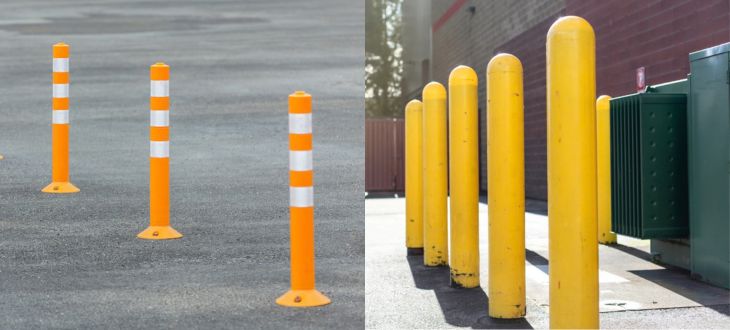
Once a steel pipe bollard is installed and the concrete has fully cured, every Tampa Bay property owner and contractor faces the same critical decision: how do you finish it? The two most common choices are installing a protective bollard cover or applying a coat of specialized metal paint. While both options dress up a bare steel post and offer initial protection from the elements, they hold up very differently against Florida’s intense heat, humidity, and salt air. Below, we break down bollard covers vs. painting to help you decide which approach makes the most financial and operational sense for your next project.
What Are Bollard Covers & How Do They Work?
A pipe bollard cover is a pre-formed sleeve — typically manufactured from high-density polyethylene (HDPE) or heavy-duty stainless steel — designed to slide directly over an installed steel post. Instead of relying on a thin painted surface to guard the metal underneath, the high-impact cover acts as a heavy-duty outer shell exposed to sun, rain, and salt spray. Protective covers usually feature high-visibility safety colors like yellow, red, or orange, with optional reflective striping to boost site safety. Because the sleeve — not the steel pipe — absorbs weathering and minor vehicle impacts, the underlying post stays shielded for years with zero upkeep.
Overview of Painting Steel Pipe Bollards
Painting is the traditional method for finishing outdoor steel, largely because of its lower upfront material cost and simple application. A thorough paint job requires cleaning bare steel, applying a rust-inhibiting primer, and finishing with an exterior-grade enamel or metal paint in standard safety colors. While a proper primer-and-paint system offers decent short-term coverage, paint is merely a surface coating. It bonds directly to metal, meaning any small scratch, chip, or impact immediately exposes raw steel to moisture. Property owners and contractors should also note that exterior industrial coatings must comply with strict VOC content limits set by EPA regulations, which can limit paint product selection.
Bollard Covers vs. Painting: A Side-by-Side Comparison
1. Durability and Impact Resistance
Paint is a thin film that easily chips, chalks, and fades when exposed to extreme UV rays and routine impacts common in parking lots and commercial loading docks. In contrast, heavy-duty HDPE bollard sleeves feature UV inhibitors and thick walls designed to resist high impacts, cracking, and sun damage without deteriorating.
2. Long-Term Corrosion Protection
Steel corrosion is a costly maintenance problem; extensive NIST research on infrastructure corrosion highlights the significant expense of replacing rust-damaged metal. When paint fails at a single point, rust creeps under the surrounding coating undetected. Protective covers maintain a physical barrier between the steel and the environment, ensuring surface scuffs never compromise the structural pipe.
3. Maintenance Requirements
In Tampa Bay’s coastal environment, painted bollards typically require scraping, priming, and repainting every 1 to 3 years to maintain visual clarity and rust control. HDPE and stainless steel covers require zero repainting and stay clean with an occasional water rinse.
4. Installation Effort and Labor Costs
Painting requires labor-intensive surface prep, multi-coat application, and drying time between coats. A protective bollard sleeve slides into place in under five minutes, making it an ideal DIY upgrade — especially when completing final post-installation steps outlined in our guide on installing bollards in concrete.
5. Cost Over Time and Total ROI
While paint offers a cheaper initial price tag, that advantage vanishes quickly once you factor in repeat labor and paint supplies every few seasons. A bollard cover costs slightly more initially but outlasts multiple paint cycles, delivering a far higher return on investment (ROI) for commercial properties.
Which Finishing Option Is Right for Your Project?
For temporary installations or low-traffic decorative posts where ongoing maintenance isn’t a concern, painting steel pipe bollards remains an accessible option. However, for most Tampa Bay commercial applications — including storefront protection, parking facilities, warehouses, and coastal properties — bollard covers are the vastly superior choice. They protect structural steel from rust, retain vibrant safety colors, and eliminate the hassle of recurring painting cycles.
Visit Tampa Steel & Supply for Quality Metal & Processing Services
Looking for top-tier steel pipe bollards, protective post covers, or expert metal fabrication in the Tampa Bay area? The experienced team at Tampa Steel & Supply is here to supply your project with quality steel materials and customized metal services.
Inquire for a custom quote online or contact Tampa Steel & Supply directly at (813) 241-2801 to speak with a metal specialist today.