
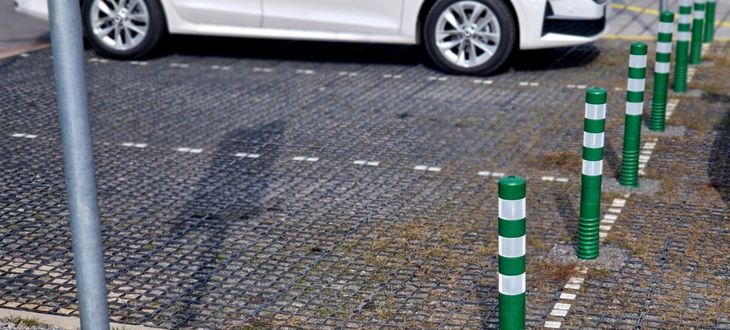
What Are Bollards and How Do They Work?
A bollard is a short, sturdy vertical post that’s installed in the ground to block, slow, or guide vehicle traffic while still allowing people to walk past freely. Most driveway bollards are constructed from heavy-duty steel pipe—typically 4-inch or 6-inch Schedule 40 or Schedule 80 steel pipe—though aluminum and concrete-filled options are also common. They work by creating a fixed physical obstacle: a vehicle simply can’t pass through or over a properly anchored bollard, while a pedestrian can step around one without any trouble.
Bollards for residential use generally come in three styles. Fixed bollards are permanently set in concrete and offer the most protection with the least maintenance. Removable bollards use a sleeve-and-pin system so you can lift them out when you need full driveway access, say, for a boat trailer. Retractable bollards drop below grade at the turn of a key, which is popular with homeowners who want daily flexibility without sacrificing security. In Florida, material choice matters more than it does in cooler climates. Salt air, humidity, and intense sun accelerate corrosion, so galvanized or powder-coated steel pipe bollards hold up far better over time than untreated metal. You can read more about how steel pipe bollards work in our full breakdown.
Can You Put Bollards on a Driveway in Florida?
The short answer is yes, homeowners across Florida can generally install bollards on their own driveway, but “generally” is doing some work in that sentence.
Note: Before you dig a single hole, you must call 811 (Sunshine 811 in Florida) or visit sunshine811.com at least two business days before digging. Sunshine 811 will notify utility companies to mark underground gas, power, water, and telecommunication lines for free so you avoid dangerous hits or costly repairs during installation.
A few things worth checking before you dig a single hole:
- Local permits: many Florida counties and cities treat a driveway bollard as a minor structure, but altering a driveway apron, easement, or right-of-way can trigger permitting requirements. It’s worth reviewing your municipality’s driveway permit rules before you start.
- HOA approval: if your neighborhood has a homeowners association, most architectural review boards require a request before you install anything visible from the street, bollards included. Florida’s HOA rules have also shifted in recent years, so it’s smart to check your community’s current governing regulations before assuming a design will be approved.
- Sightlines and access: bollards can’t block a fire hydrant, obstruct a driver’s view of the street, or interfere with mail, trash, or emergency vehicle access.
- Surface type: installing on existing pavement, brick pavers, or a poured driveway each call for a different footing approach. We cover the differences in our guide to installing bollards on pavement. A Florida-specific overview of residential bollard installation also covers material choices suited to our climate.
Once you’ve cleared Sunshine 811, confirmed permits, and secured HOA sign-off, installation itself is usually a weekend project for a fixed bollard or a quick professional install for a retractable system.
Benefits of Bollards for a Driveway
Once installed, driveway bollards earn their keep in several ways:
- Protecting your property. Bollards create a buffer around garage doors, exterior walls, gas meters, and irrigation backflow devices, so a driver who misjudges a turn hits a post instead of your house.
- Deterring unwanted parking. A pair of bollards at the mouth of a driveway keeps delivery trucks, rideshare drivers, and inconsiderate neighbors from blocking your access.
- Guiding traffic safely. On wider driveways or shared access points, bollards mark the edges so visitors know exactly where to drive and where the landscaping begins.
- Adding a layer of security. Fixed bollards make it much harder for a vehicle to ram a gate or garage door, which matters more in coastal communities where break-ins targeting garages and boats are a real concern.
- Standing up to Florida weather. Quality steel pipe bollards shrug off heat, humidity, and tropical storms with almost no maintenance, unlike wood or vinyl barriers that rot or crack.
- Boosting curb appeal. Decorative caps and covers let bollards double as a design element rather than a purely functional post.
Choosing the Right Bollard for Your Driveway
The right bollard depends on how you use your driveway day to day. If you rarely need to change your access, fixed steel pipe bollards are the simplest and least expensive option, and our breakdown of pipe bollard benefits covers why they remain the standard for homeowners and businesses alike. If you need to open the driveway occasionally, a removable or retractable model gives you that flexibility without permanently blocking access.
Proper spacing is critical to ensure both accessibility and security. Spacing posts at least 3 feet (36 inches) apart provides ADA-compliant pedestrian clearance, allowing wheelchairs, strollers, and foot traffic to pass comfortably. To effectively exclude vehicles, spacing should not exceed 5 feet (60 inches) between post centers, as posts set further apart won’t stop a standard passenger vehicle or truck from driving through. Budget-wise, a straightforward residential installation is far more affordable than most homeowners expect, and our guide to bollard installation costs walks through pricing by bollard type so you can plan accordingly.
Trust Tampa Steel & Supply for Your Next Project
Tampa Steel & Supply is your trusted source for quality steel pipe bollards in the Tampa Bay area, offering pre-cut sizes ready for fast installation along with custom cutting services for unique site requirements. As a family- and veteran-owned business proudly serving Tampa Bay since 1983, our team is ready to help you choose the right diameter, length, or spacing for your driveway project.
Inquire for a Custom Quote online today, or call Tampa Steel & Supply at (813) 241-2801.