
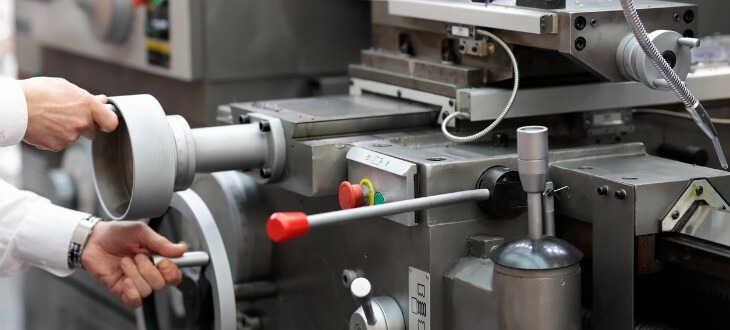
What is CNC Machining?
CNC (Computer Numerical Control) machining is an automated process where computer software controls machine tools such as mills, lathes, and routers. Instead of manual operation, machinists program instructions (G-code) that dictate every movement of the machine.
How CNC Machining Works
The process begins with a digital design file (CAD model), which is converted into machine-readable instructions. Once programmed, the CNC machine executes operations like cutting, drilling, and shaping with minimal human intervention.
Because the process is automated, CNC machines can run continuously and produce highly consistent results across large production runs.
Learn more: How Does CNC Machining Work?
Advantages of CNC Machining
When comparing CNC vs. manual machining, CNC stands out in several key areas:
- High Precision and Consistency: CNC machines deliver extremely tight tolerances, often within microns.
- Faster Production Speed: Once set up, CNC machines operate much faster than manual systems and can run 24/7.
- Complex Design Capability: Intricate geometries and curves are easily achieved through automation.
- Reduced Human Error: Automation minimizes mistakes caused by fatigue, resulting in fewer defects.
- Scalability: Perfect for mass production; the same design can be replicated across multiple machines.
See related: 10 Advantages and Benefits of CNC Machining
Disadvantages of CNC Machining
- High Initial Investment: Machine, software, and setup costs can be expensive for small operations.
- Programming Complexity: Requires skilled operators to manage G-code and CAD/CAM software.
- Less Flexibility for Quick Changes: Adjustments require reprogramming rather than simple manual tweaks.
- Maintenance Costs: Complex electronics and mechanical components can be costly to repair.
What Is Manual Machining?
Manual machining involves traditional machines operated directly by a skilled machinist. The operator controls cutting speed, positioning, and depth using hand-operated tools and mechanical controls.
How Manual Machining Works
In manual machining, the machinist physically guides the cutting tools and adjusts settings in real time. This hands-on approach allows for immediate modifications during the process. It is commonly used for custom parts, repairs, and small production runs.
Advantages of Manual Machining
- Greater Control and Flexibility: Machinists can instantly adjust the process for one-off projects.
- Lower Upfront Costs: Machines are more affordable and do not require expensive software.
- Ideal for Prototyping: Faster to start for small batches since no programming is required.
- Easier Maintenance: Simpler mechanical systems are generally cheaper to repair.
- Skilled Craftsmanship: Experienced machinists bring intuition that machines cannot replicate.
Disadvantages of Manual Machining
- Lower Precision and Consistency: Results depend heavily on the operator’s skill, leading to slight variations.
- Slower Production Speed: Requires constant supervision, making it inefficient for volume.
- Higher Risk of Human Error: Fatigue or miscalculations can lead to wasted material.
- Limited Scalability: Not efficient for high-volume production due to labor constraints.
- Safety Risks: Operators work closely with moving parts and cutting tools.
- Environmental Demands: In humid regions like Florida, manual machines require rigorous daily maintenance to prevent oxidation on exposed surfaces.
CNC vs. Manual Machining: Key Differences
| Feature | CNC Machining | Manual Machining |
|---|---|---|
| Precision | Extreme / Micron-level | High (depends on operator) |
| Cost (Setup) | High initial investment | Low initial investment |
| Speed | Fast, 24/7 operation | Slower, manual operation |
| Volume | Ideal for mass production | Best for small batches/prototypes |
CNC vs. Manual Machining: Which is Better?
The right choice depends on your specific project requirements.
Choose CNC Machining If You Need:
- High precision and tight tolerances
- Large production volumes
- Complex part designs
- Faster turnaround times
Choose Manual Machining If You Need:
- Custom or one-off parts
- Lower upfront investment
- Quick adjustments during production
- Small batch or prototype work
In many cases, manufacturers use both methods together, manual machining for prototyping and CNC machining, for full-scale production.
The decision ultimately comes down to balancing cost, speed, precision, and production scale. CNC machining leads in efficiency, while manual machining remains valuable for flexibility and craftsmanship.
The team at Tampa Steel & Supply specializes in bridging this gap by analyzing Tampa’s unique industrial landscape. Whether you’re navigating the salt-air demands of marine manufacturing or the rapid prototyping needs of the aerospace sector, we ensure your project utilizes the most cost-effective method.
Visit Tampa Steel & Supply for CNC Machining and Quality Metals
If you’re interested in CNC machining and plasma cutting, the dedicated team at Tampa Steel & Supply can help bring your designs to life! Stop by our warehouse or reach out today for a quote.
We provide a full range of top-quality services and stock an extensive list of steel products for whatever project you need to tackle. With nearly four decades of experience, we are ready to assist you.
Inquire for a custom quote online or call Tampa Steel & Supply at (813) 241-2801.